
Lancashire Heeler
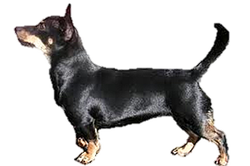
Lancashire Heelers are small herding dogs that traditionally drive cattle by nipping at their heels. As a secondary task they can be used for ratting, due to terrier background in their ancestry. Today they are kept primarily as companions.
Lancashire Heeler Standards
- AKC (FSS)
- KC (Pastoral)
- UKC (Herding)
- 10-12"
- 6-13 lbs
- small, low to the ground heeler
- triangular, prick ears
- long tail is set low to the ground
- double-coat is harsh and smooth
- black and tan
- liver and tan
History of the Lancashire Heeler
The Lancashire Heeler was created in England in the 1600s when Welsh cattle were being driven to market in the Lancashire town of Ormskirk. Welsh Corgis drove these dogs and mated with local Manchester Terriers to produce the basis for the stock. Some have stated that the breed actually became extinct between the World Wars and was recreated in the 1960s by once again crossing Corgis and Manchester Terriers. The Lancashire Heeler Club refutes these claims, and has breeding records from certain families going back over 80 years. Today they remain a rare breed and are listed as one of the most vulnerable breeds in the United Kingdom, with only 134 dogs registered by The Kennel Club (KC) in 2010.
Related Breeds: