|
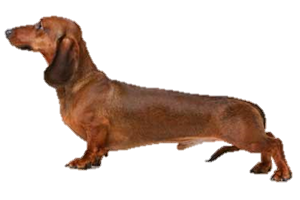
Dachshund The Badger Dog The Dachshund is a small breed of dog that originated in Germany. Once used for hunting badgers and other small prey, the Dachshund is now almost exclusively a companion breed. Appearance
Dachshunds have long bodies and stand very low to the ground. There are two common size varieties, standard and miniature. Standard dogs are between 14-18 inches tall and weigh between 11-32 pounds. Miniatures are up to 14 inches tall, but weigh only 9-10 pounds. In countries under the Federation Cynologique Internationale (FCI) Kennel Club there is a third variety, the Rabbit Dachshund. Under the FCI Standards weigh from 18-22 pounds, Rabbit is 11-18, and Miniatures are 10-11. Some breeders are breeding an even smaller size, which is unrecognized by kennel clubs, but referred to as toys. The toy size is up to 12 inches tall and only 8 pounds. The Dachshund also has three coat varieties, smooth, wire and long haired. Smooth coats are short and dense, while the longhaired is covered with a long silky coat and only the fur on the head is short. Wirehaired dogs have a hard and wiry topcoat, with a softer undercoat. They also have a bushy beard and longer hairs above their eyes, giving them the appearance of eyebrows. Dachshund colors range from solid reds and creams to bi-colored black and chocolate, as well as just about every color in between. History
Each of the Dachshund’s coat varieties has a slightly different history, beginning with the smooth. The exact origins are unknown, although it is thought that their ancestors may reside in ancient Egypt. Engravings have been found with short-legged hunting dogs, and recently mummified dachshund-like dogs were discovered in burial urns. It is known that the modern dog we know today dates back to the Middle Ages, Germany is credited with its design, but it was kept in royal courts throughout Europe. Originally the breed was called the Dachs Kriecher (badger crawler) or Dachs Krieger (badger warrior), well known for its use in badger hunting. Later they would be come known as the Dackel or Teckel, names that are still recognized in its homeland. These first dogs were larger than those today, and were used to hunt other animals as well, including rabbit and fox, while large packs of Dachshunds were known to take on wild boars and wolverines. Adding short-legged spaniels to the line, similar to the Sussex or Field Spaniels, probably developed the longhaired Dachshund. This variety seems to have a more affectionate, spaniel-like personality than the other Dachshund types. The addition of rough haired pinschers to the smooth line created the wirehaired Dachshund. Further crosses included the Dandie Dinmont Terrier, which seemed to add some control to the Dachshund’s natural bloodlust. Temperament
Dachshunds are friendly, playful dogs, and are known to have a terrier-like temperament. Most dogs can be very stubborn and independent, making them difficult to train. This is also a breed that loves to dig and some individuals can suffer from separation anxiety. They are wary of strangers and have a loud bark, which makes them good watchdogs. Due to their different backgrounds and bloodlines, each coat variety tends to have slightly different temperaments. The longhaired tends to be more calm, while the wirehaired more outgoing. They do best with older children, and tend to do well with most pets, provided they are socialized at an early age. Dachshunds can easily become jealous if they are not the center of attention. Health and Care
The Dachshund is heavily prone to spinal disc problems. They can also develop heart disease, urinary tract problems, and diabetes. This breed can easily become overweight. Dachshunds have a live expectancy of 12-15 years. Dachshunds can adjust easily to apartment life, however they are active dogs and require daily exercise. They enjoy playing and outside activities, this breed has surprising stamina for its size. Grooming requirements depend on the coat type, longhaired Dachshunds need daily brushing, the wirehaired must be clipped on average twice a year, and the smooth variety needs little attention. |
|