
Alpine Dachsbracke
Alpenländische Dachsbracke, Alpine Basset Hound
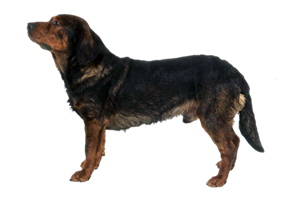
The Alpine Dachsbracke is a hardy breed, bred to survive the harsh climate of the Alps. It is a low scenthound, developed to track wounded game such as deer, boar, fox, and hare on foot. In Austria, a hunter’s code of honor does not allow anyone to leave a wounded animal to die of its wounds and so the Alpine Dachsbracke's specializes in locating them to be killed.
Alpine Dachsbracke Standards
- 13-16.5"
- 33-40 lbs
- small, low scenthound
- long ears
- brush tail, long and carried downward
- double coat is thick and dense
- dark deer red with or without black hairs
- Vierälugl (black with red/brown markings)
History of the Alpine Dachsbracke
The Alpine Dachsbracke was created in the mid to late 1800s, from crossing the native Austrian Black and Tan Hound with smooth-sized Dachshunds. Originally called the Alpine-Erzgebirgs-Dachsbracke, it was a favorite throughout Austria and Germany. It was given its current name in 1975 when it was recognized by the Fédération Cynologique Internationale. Today the Alpine Dachsbracke remains little known outside of its homeland and is still used for hunting with small, local fanciers.
Related Breeds: