
|
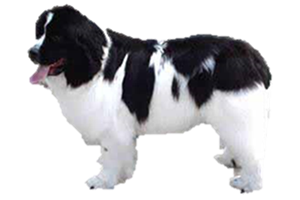
Landseer The Black and White Newfoundland The Landseer originated on the island of Newfoundland, which is now part of Canada. Some kennel clubs simply believe this breed to simply be a black and white variant of the Newfoundland, however, the Federation Cynologique Internationale (FCI), among others, consider it to be a separate breed. It is mostly in Europe (not including the United Kingdom) that the Landseer is seen as a different breed. In comparison to the Newfoundland the Landseer normally has longer legs and is sportier and less massive then their “cousins”. Dogs stand between 28-31 inches and weigh in at 130-150 pounds. Females tend to be smaller. They love the water and are well equipped for swimming, having a webbed feet and a water-repellent coat. Coats are mainly white with black patches along their bodies. Landseers commonly have a black head with a white muzzle and blaze. The Landseer was given its name in honor of the famous animal painter, Sir Edwin Landseer. He often painted these black and white dogs, the most famous of these paintings being “A Distinguished Member of Humane Society”. The breed was known to exist as far back as 1893 in Holland, and the Landseer was recognized in 1960 by the FCI. Landseers make excellent pets; they are sweet, loyal, and lovable dogs. It is easy for them to become so attached to their owners that it would be devastating to them to be switched to a new family. They get along well with other animals and children, although occasionally males can be aggressive around other males. Landseers make great companions for all outdoor hiking, camping, and swimming activities. Like all large dogs the Landseer is prone to hip dysplasia. Puppies should also have their hearts checked for a disease called sub-aortic stenosis (SAS). All Landseers with SAS would not be aloud to breed, and responsible breeders will check adults before doing so. |
|