
Golden Retriever
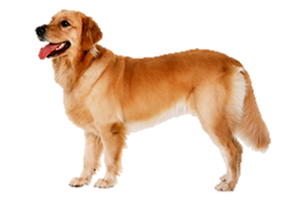
The Golden Retriever was originally developed as a gundog. Retrievers are used to bring back shot birds from both land and water to their waiting hunter. Although many gundogs can retrieve, the category of retrievers are more specialized at the task of finding drowned waterfowl. Today the Golden Retriever is a widely popular companion, assisting the blind and disabled, and some still work in the field as gundogs.
Golden Retriever Standards
- AKC (Sporting)
- FCI (Group 8)
- KC (Sporting)
- UKC (Gun Dog)
- 21.5-24"
- 55-75 lbs
- large retriever
- short ears and long tail
- water resistant coat can be straight or wavy
- feathering on neck, legs, tail and under body
- golden shades
History of the Golden Retriever
The Golden Retriever was developed in the 1800s in Scotland at Guisachan, the highland estate of Baron Tweedmouth. The original cross was a yellow-colored retriever named Nous, with a now extinct Tweed Water Spaniel, Belle. This produced a litter of four, which was the basis for the breeding program. Other dogs would eventually be added to the line, including the Irish Setter and the extinct St. John’s Water Dog (ancestor to the Labrador Retriever). Once lumped together with the Flat Coated Retriever, the Golden Retriever took their present name in 1920.
Related Breeds:
Flat Coated Retriever